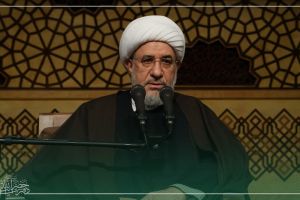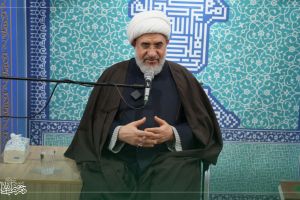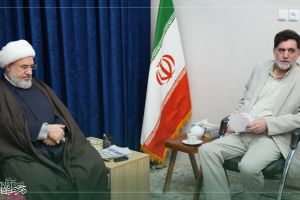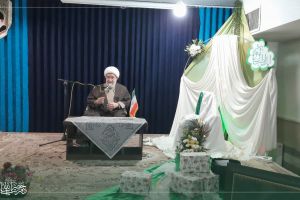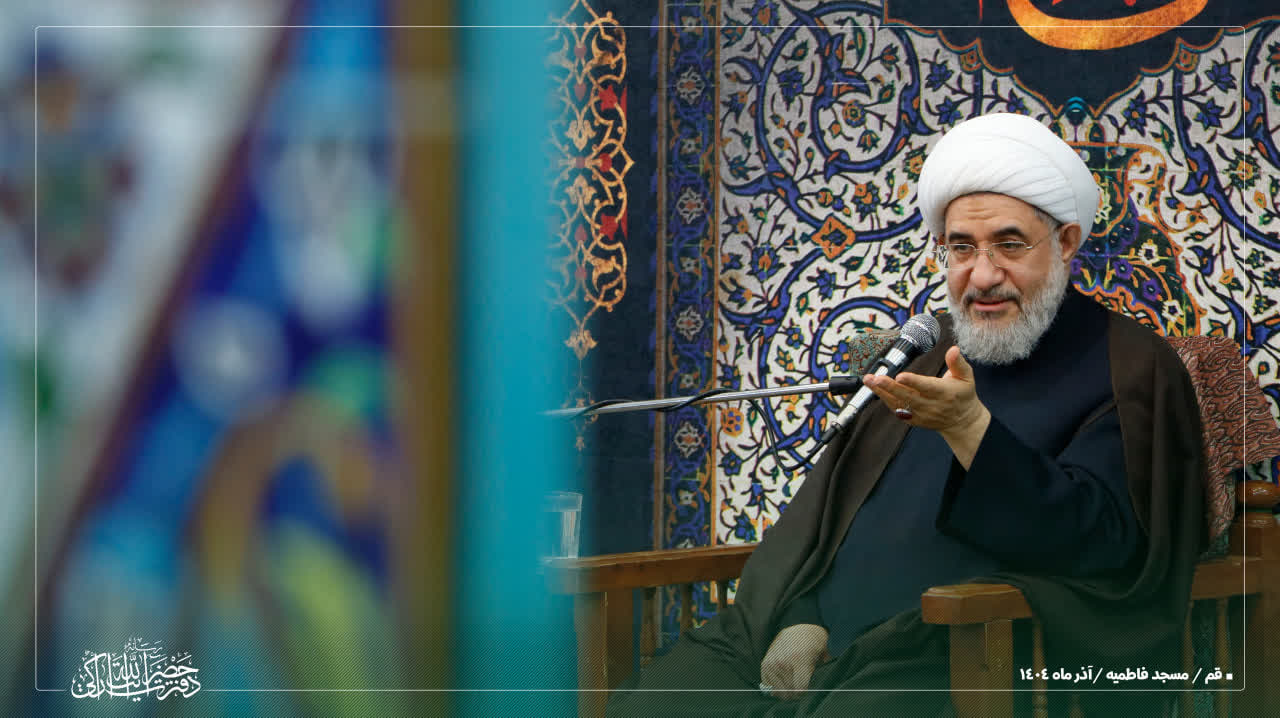
Ayatollah Araki, emphasizing that one of the current challenges of the country is the presence of weak elements within the managerial structure, stressed that the solution to this problem is the maximum vigilance of the people during elections.
According to the Public Relations Office of Ayatollah Araki, His Eminence—speaking among the worshippers at Fatemiyeh Mosque in the Bajak area—offered his condolences on the anniversary of the martyrdom of Lady Fatimah al-Zahra (peace be upon them), and stated: There is no doubt that both the past and the future of the world are shaped by events such as the tragedy of the martyrdom of the Noble Lady (peace be upon her).
He continued: We must understand that the uprising of Lady Zahra (peace be upon her) was for establishing divine governance and fulfilling God’s promise, and that all the Infallibles (peace be upon them) pursued this lofty goal.
He then highlighted some characteristics of the Fatimid and Alawite governance and the rule of Ahl al-Bayt (peace be upon them), saying: One of these features is the culture of “the neighbor before the house,” meaning avoiding selfishness and paying attention to others; a concept also mentioned in Qur’anic verses such as “They give preference to others over themselves, even when they are in need,” and “They give food, despite their love for it, to the needy, the orphan, and the captive.”
He added that the greatest manifestation of God’s creation is the creation of the human being, for through this creation God demonstrated that this being, by his will, can become a manifestation of divine ethics and spread these morals throughout society.
He emphasized that the sacrifices of the Ahl al-Bayt, including the epic of Ashura, were aimed at presenting truths to society and introducing noble figures such as Abu al-Fadl al-Abbas (peace be upon him) and Ali al-Akbar (peace be upon him).
He continued: The late Imam Khomeini (may God bless his soul) showed us during the Sacred Defense period that we can cultivate individuals like those noble figures and present them to society.
Ayatollah Araki also touched upon the topic of chastity and hijab, stating: The repeated warnings of concerned scholars about hijab are not about a few heedless individuals who are poorly veiled; rather, the concern is about preventing the spread of Western culture in an Islamic society instead of promoting Islamic values.
He explained that one of the key principles of Fatimid governance is developing the earth and nurturing human talents, reminding that ruling based on knowledge and intellect and benefiting from scholars is among its most important principles.
He also pointed to the principle of justice and avoidance of oppression in Fatimid governance, saying: All these efforts, struggles, resistance, and sacrifices in an Islamic society signify readiness to endure hardships for the establishment of a government based on love, intellect, and virtue.
He then emphasized: We believe that despite all the threats and hostilities that have targeted the Islamic Revolution and the Islamic system throughout the years, the enemy has now reached the point of desperation, and we will eventually be victorious, for this is the divine promise — a promise we have witnessed fulfilled throughout the life of the Islamic Revolution.
He added: If it were not for the infiltration of opponents and hypocrites, we would have made much greater progress. One of the current problems of the country is the presence of weak elements in the managerial structure, and the solution is the utmost vigilance of the people in elections.
He called upon the clerics to increase public awareness, emphasizing that the country’s managers must be willing to sacrifice themselves for the people.